You don't need a perfect craft table to notice colour.
There are days when the idea of getting out paints feels like signing up to clean the dining table twice. Fortunately, colours are already everywhere. They arrive in fruit bowls, washing baskets, toy boxes and the mismatched socks nobody can explain.
For little children, noticing a colour doesn't have to become a structured lesson. Sometimes it's simply something to talk about while getting on with the day.
Start with what is already there
Look around the room and choose one colour. Blue might be a cup, a cushion or the corner of a favourite blanket. Red might turn up in a strawberry, a book cover or a toy car.
You could say, “I've spotted something yellow.” Wait, look together and see what happens. Your child might point, name the colour or decide that the interesting part is actually the spoon. That's fine too.
Make it a tiny scavenger hunt
If your child enjoys finding things, try a low-effort colour hunt. Pick a colour and notice two or three objects while you move through the house.
There is no need to collect everything into a pile or make a special printable. The whole activity can happen between putting away the washing and finding somebody's missing shoe.
Notice colour on a walk
Outside, colour can be gentler and less predictable. Leaves aren't all one kind of green. Pavements change shade when they're wet. A bright flower catches the eye beside a fence.
Point to something and talk about it in the words your child uses. Different families speak different languages and tell different stories; a colour walk can belong to any of them.
Let books start the conversation
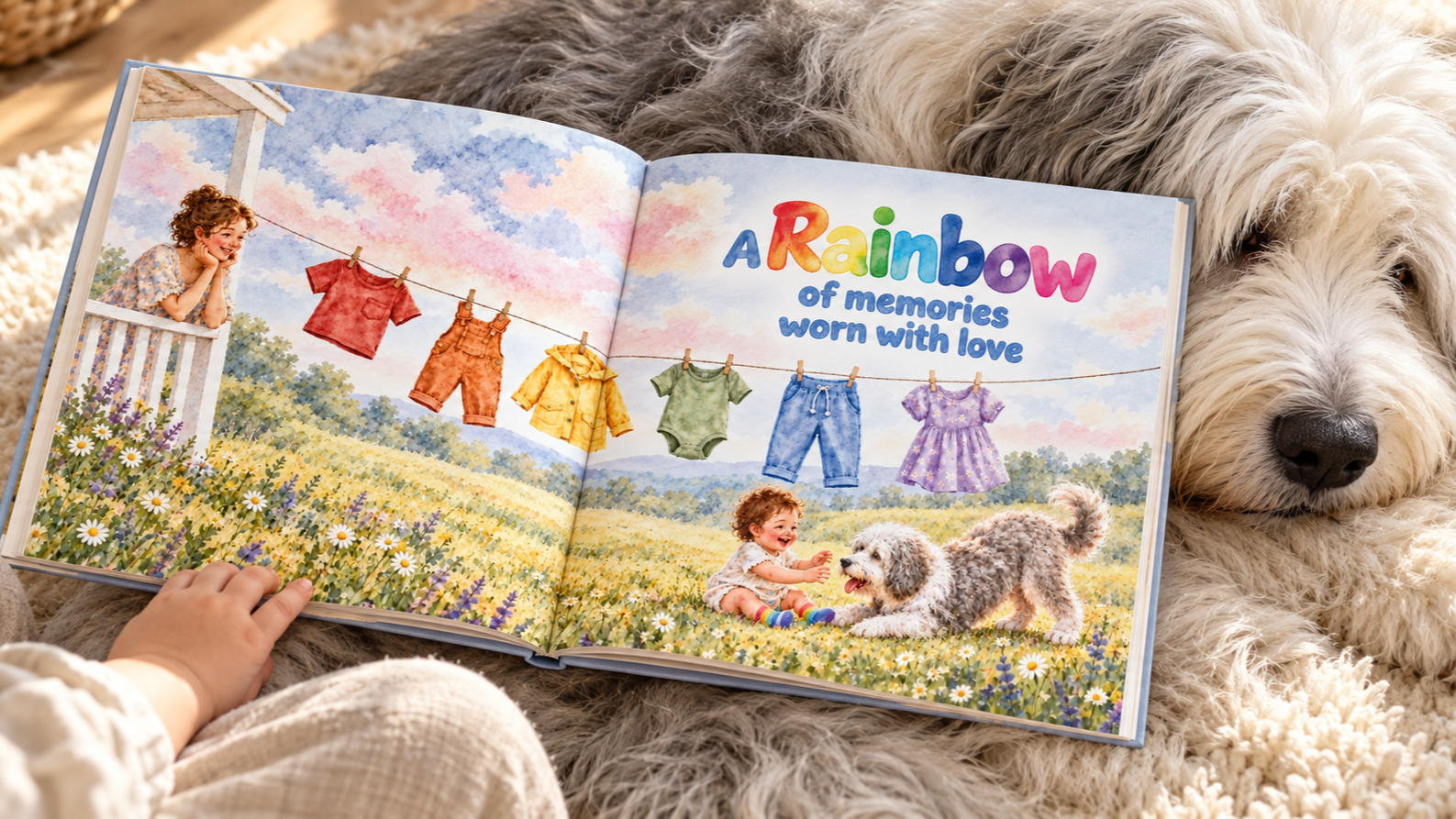
A picture book gives you a little gallery to look at together. You can pause on one spread, choose a detail and see whether your child recognises a similar colour in the room.
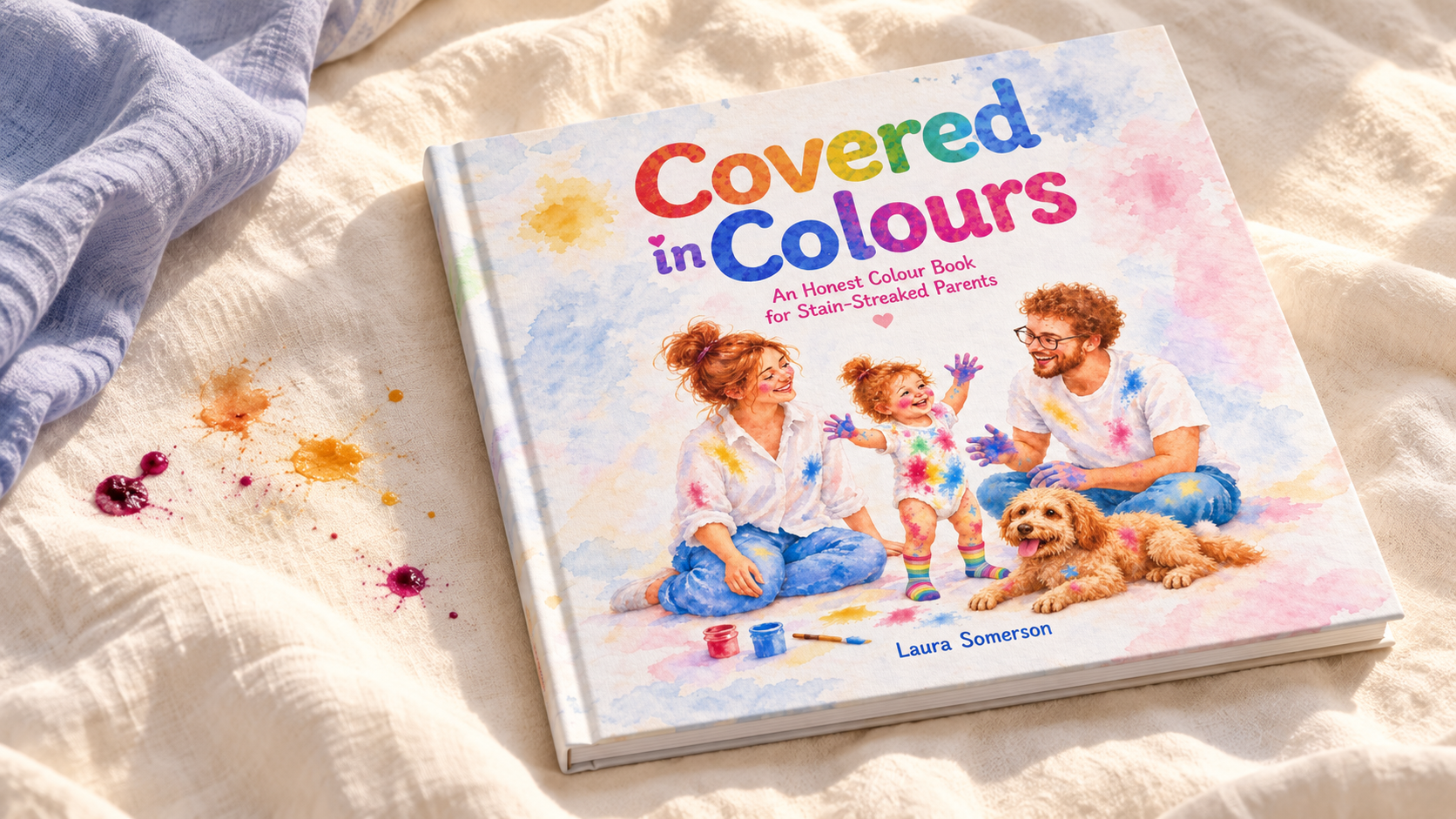
Covered in Colours: An Honest Colour Book for Stain-Streaked Parents happens to find plenty of its colours in the messy business of ordinary family life. Which feels about right. A colour can be beautiful and still turn up on a freshly washed shirt.
Keep it playful, not a test
If your child calls everything blue for a while, you don't need to turn the moment into a correction session. You can model the word naturally: “That's a lovely red cup.” Then move along.
Early conversations around books and everyday objects are valuable because they give children words and ideas to explore, as Raising Children Network notes in its guidance on literacy activities.
And when the day gets busy? Put the activity away. The world will still be full of colours tomorrow.
Explore Covered in Colours and the other Little Petal Press books for more small moments worth noticing.
